Re:freedom – Against Conformity, For Public Reasoning
In 2016, I was teaching at the University of Chicago Law School – one of the top law schools in the country and the academic home of legendary figures, from Nobel laureate Ronald Coase to Supreme Court Justice Antonin Scalia and former President Barack Obama (among many others). We were in the middle of Donald Trump’s first presidential campaign—hardly surprisingly, a frequent topic of conversation among colleagues. What surprised me, though, was the ease of consensus. Trump was not going to win. Hillary had it in the bag—“easy peasy.”
They were wrong.
But that is not the point. The more interesting question is why they were wrong.
Part of the answer, I think, has to do with the growing distance between academia and the general public. Academics are increasingly perceived as lacking a pulse on what is happening in the “real world.” In other words, the old criticism of the “ivory tower” still has bite (especially at elite institutions). Public confidence in higher education has eroded and, in 2024, more than two-thirds of Americans said colleges and universities were “moving in the wrong direction.”
I understand the temptation to write this off as anti-intellectualism. But that response is too quick and, at best, incomplete.
Another part of the answer, I believe, is the rise of a “culture of consensus,” especially within universities, where disagreement is increasingly chastised for making others uncomfortable. But that comes at a high price: the conformity of views and ideas. As I often tell my students, we fought for centuries to secure the right to disagree. One of my favorite writers, George Orwell, puts the point well: “[i]f liberty means anything at all, it means the right to tell people what they do not want to hear.” Benjamin Franklin, in his characteristically direct way, puts it even more bluntly: “[w]hen everyone is thinking alike, no one is thinking.”
With that in mind, Re:freedom has two aims: reconnect academic inquiry with public life and reclaim disagreement as a civic good.
With that in mind, Re:freedom has two aims: reconnect academic inquiry with public life and reclaim disagreement as a civic good.
***
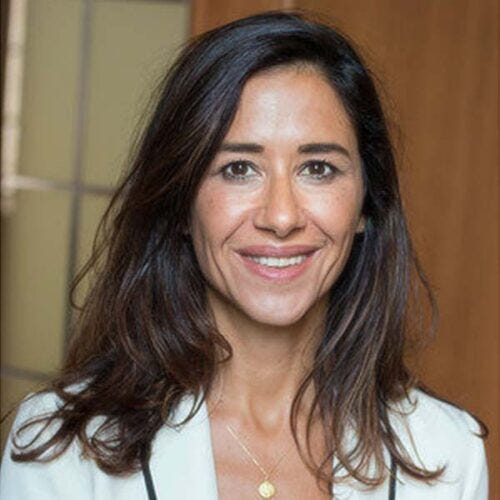
Welcome to the University of Arizona Center for the Philosophy of Freedom’s Substack. I’m Dr. Saura Masconale, Freedom Center’s Associate Director. Together with Freedom Center’s Director, Dr. Mary Rigdon, we hope Re:freedom can serve as a new forum for public reasoning.
I personally believe the scholar’s vocation involves not only understanding and interpretation, but also engagement—bringing ideas, arguments, and standards of rigor into civic life. Socrates carried philosophy into the streets of Athens (much as our own Mariana Noe did last month on the streets of Tucson). Enlightenment thinkers such as Adam Smith, Montesquieu, and Tocqueville likewise wrote not just for specialists, but for the wider public. Re:freedom seeks to reclaim that tradition by reconnecting academia with the broader public, showing why the hard work of asking questions and searching for answers matters in a free society.
That is easier said than done. To help us avoid getting lost in translation, we are turning to our friends Johanna Maska and Jay Nordlinger, Freedom Center’s Journalists in Residence. Johanna and Jay will ask their own questions, and I am sure that this will help all of us, within and beyond campus, push for more challenging answers.
Their participation also reflects the other commitment at the heart of Re:freedom: recovering the value of dialectical exchange by providing a forum for critical rational scrutiny. Disagreement is central to that project because critical rational scrutiny, as put by Robert P. George, requires a practice in which “no beliefs – moral, political, religious – are sacrosanct.”
That practice will take different forms. Sometimes, different perspectives will converge on the same question organically, simply as a sign that the topic matters. In the inaugural round of contributions, for example, Seth Sowalskie and Simone Sepe both spontaneously take up the question of polarization. Yet they provide very different answers. Seth draws on Søren Kierkegaard, the father of existentialism, to argue that polarization stems from a lack of passionate civic commitment, weakening democratic institutions and alienating citizens. Simone’s piece shifts the lens, suggesting that polarization is not always a political failure, but can be part of the difficult, even bloody at times, business of keeping a republic.
Other times, we will make the encounter between diverse views happen intentionally, bringing disagreement to center stage. We are not interested in consensus. We are interested in public reasoning. And I think people are too—or at least that is what my most recent experience with this kind of collective engagement suggests.
On March 25, we brought together Arizona Secretary of State Adrian Fontes, a Democrat overseeing elections in one of the country’s most scrutinized political environments, and Republican State Representative Matt Gress, Chair of the House Education Committee, for a public conversation in celebration of America250 shaped by questions submitted by the audience (and moderated by yours truly).
I was not surprised that, despite our guests’ different political colors, many of their answers converged. There seems to be something about staging a conversation in an academic setting that brings a certain dialectical discipline with it, along with room for shared understanding. What struck me most was their shared view of the pursuit of happiness not as a right “to” something, but as a right “toward” something.
A bit of surprise came when I finally “got” them to disagree. On academic freedom and public funding for higher education, Fontes lamented chronic legislative cuts and Gress stressed the concerns raised by a certain academic orthodoxy, whether real or perceived. But the greatest surprise was another. It was the audience: how many people stayed, listened, and wanted to be part of the conversation on a beautiful Wednesday afternoon, well past seven (to be fair, it helped that both Fontes and Gress are exceptionally strong public speakers).
Many in the room, I am sure, disagreed with one speaker or the other. And yet they stayed. That suggests people are not done with disagreement. They may simply be waiting for forums in which disagreement is worth their time. I hope Re:freedom can be one of them.
Saura Masconale (Bio)
Freedom Center Associate Director, Assistant Professor of Political Economy and Moral Science, James E. Rogers College of Law Affiliated Faculty